Showing posts with label advice. Show all posts

Monday, March 14, 2016

Writing What You Know and Researching What You Don't

Clips
Beginning writers are often given the advice "write what you know." It's not a rule, not by a long shot. It's advice.

And it's not even advice that applies  long-term.

It's training wheels.

When you're starting to write, you have a lot of brand new considerations to make. You're learning to balance craft -- storytelling, grammar, narrative, pacing, character, dialog -- and the best way to do that is to do. That is, write. And if you're spending the majority of your time researching, then you're not writing.

Further, it can become hard to parse if your story isn't working because of craft issues or because you're writing about something you clearly have no experience with. It's best to eliminate variables to help diagnose the problem. In this case, eliminating places, careers, time periods, situations, etc., that you're unfamiliar with, means that the problems that are left are probably craft problems.

So once a writer reaches the stage where her writing feels solid enough to take on research . . . well, that's a brand new, fabulous can of worms.


Research: it's like spinach for writers

You need to know what you're talking about. There it is. The reason we say "write what you know." You need to know what you're talking about. If you've experienced it, all the better. If you haven't, then you need to research it to make it something you know.

And there are three layers of knowing to consider: details/mechanics, emotions, and cultural/social structures.

Details and mechanics can always be researched. Start with a Google search. Read articles on the topic. Read books on the top (or the relevant parts of books on the topic). Visit the location. Visit museums or reenactments of the time period. Watch/read fiction with a similar setting.

You can find Writer's Police Academy events put on around the country -- very popular with mystery writers for obvious reasons. They walk writers through some routine procedures, let them learn what it feels like to be handcuffed, answer questions, and the like.

Of course, technical details can be gleaned from reading-research or watching-research, but nothing beats the real thing for the sensory experience. The smell, sound, taste, and feel of the thing/place can instantly make fiction real, regardless of how well we can "see" it.

Emotions. The way people react in certain situations and the ways they process information, grief, etc. -- those are much harder to do direct research on. The best research on this count is life experience. The more situations you've encountered in your life, the more you know about your own reactions and the reactions of others. Some can be discerned through people-watching, and some through really engaging with fiction, but nothing beats life experience.

Have you ever read something where the character's emotion seems totally off base and you just have to wonder, has the writer ever actually experienced the death of someone close to them? or falling in love? had their heart broken? been cheated on? lost a job? been told they had a life-changing diagnosis? been in combat? or whatever the situation is. Research/experience is important here too.

Not to mention social structures. Different social groups have different structures and rules that determine how people act. Be aware that characters from different backgrounds will act differently, whether it's a cultural, generational, or linguistic difference. I've seen good writers fail miserably while attempting space-based military science fiction. They love the genre and have a grasp of the science, but absolutely no experience with the military, and it killed the realism of the character interactions in that particular setting. Can someone who's never served write good military SF? Probably, but it'll take a lot of research and the help of experts.

Research makes writing stronger. Like spinach.

But like Popeye, you don't apply the spinach directly to the problem, you ingest it and let it work through you. Don't dump research directly into the writing, let it work through you. Let it become part of your character building and creative process. Let it become part of your body and brain until you use it unconciously.

And beware the infodump-disguised-as-dialog route. That's a bit like swaping coats and expecting facial recognition software not to find you. Savvy readers will be able to see right through that disguised research dump.

But research that's well incorporated can heighten the reader's sensory experience. Do you know what a morgue smells like? I don't. Not from personal experience. But a well-written scene could transport me there even if it's not an experience I really want to have firsthand.

Research: it's like entering the Fire Swamp

Do you know someone who's been "doing research" on their novel for years? When you ask how the writing's going, they tell you about this or that resource they've found and how it's inspiring them, but updates on the actual writing of the story are much more sparse.

Research, as wonderful and necessary as it may be, can become a Fire Swamp for writers that prevents them from reaching their ultimate goal: the writing.  Patches of lightning sand to suck you in and suffocate you. Spouts of flame. R.O.U.S.s that creep along in the shadows, tailing you, wiggling their ugly noses to stay on your scent.

The Fire Swamp is absolutely not someplace you'd like to build a summer home, but it is a place you could live quite happily for a while . . . so long as you get out before one of the three great dangers of the Fire Swamp does you in. Or rather, kills your chances of completing a project.

It's the twists and turns of research that suck you in so that you never feel like you've reached the bottom, that you know enough, and can stop researching. It's the spurt of flame that destroys one idea, so you move your feet quickly and start down a new path of research you didn't expect to go down in order to flesh out a second idea. It's the creeping doubt that you're not getting it right, you need to know more before you can proceed or the critics and experts are going to eat you alive.

You may have to traverse the Fire Swamp of research. Just remember, once you go in you can make it out.

But why bother doing deep research at all? Because Wikipedia is a wonderful place to start research but a horrible place to end it.

Moving beyond Wikipedia

Wikipedia, a horrible place for your research to end. Yep, it's worth repeating.

Wikipedia can't tell you what a morgue smells like. It can't express to you on a scale of 1-10 how itchy and uncomfortable a Civil War uniform is. It can show you pictures of the coast of Ireland or the Amazon rain forest or the Southwest, but it can't tell you how the air feels on your skin in those places or the wuzziness of altitude sickness in a desert is like. Nor is it going to differentiate between technical detail and day-to-day details of certain occupations.

Consider Wikipedia on par with asking your spouse or neighbor or co-worker, hey, have you ever heard of such-n-such, and then discovering that they have a good passing knowledge of the thing. Conversational knowledge. They can give you keywords and point you in the right direction as you continue to research and read things by actual experts that is more in depth than a Wikipedia article could ever be (and eventually you can contact those experts, more on that later). Whether those are news articles, journal articles, or books.

And no, not all those resources are going to be free.

Well, not free on the internet. But if you have a library card, you can bet your ass they're still free. You just have to do some work and carry your butt down to your library.

Only have a popular library in your town? No access to a research library (usually a university library)? Actually, you do have access to huge libraries even through a tiny little small town library. Most public libraries are connected to a state-wide network that connects both city and university collections. In Michigan it's called MeL Cat, the Michigan eLibrary Catalog. What you can do with that website catalog is take your library card, the one from Podunk Town, and use it to check out books from the University of Michigan or Michigan State University or whoever has the book you want. And best of all, those libraries will deliver the book to your local library for free. You pick it up and check it out using your regular old library card.

If you have access to a system like this (and again, in Michigan you almost always can get access and I have to imagine other states have similar systems), you can get access to serious, vetted, in depth resources, some of which would be expensive -- or impossible, if they're out of print -- to purchase on your own.

All you have to do is be patient and wait for them to be delivered. Use that time to write the next scene. You know, avoid feeling like you're building a summer cottage in the fire swamp.

When/how to consult an expert

In the Roundtable Podcast interview "20 (more) minutes with Jeanne Cavelos, the host remarked that Jeanne Cavelos had several appeals for help listed on her website's front page. One of which was for experts in scientific fields she was not herself well versed in, and another appeal states, "My main character is bipolar (manic-depressive). If you are bipolar and don't mind sharing some of your experiences..."

I agree with the Roundtable Podcast host Dave Robison about the absolute remarkableness of reaching out. As writers who are creating whole worlds in our minds or who are perhaps hard pressed to carve out time alone to do the writing, the idea that we then need to reach out to others is . . . tough sometimes. Such an easier route is to just jump on Wikipedia and call it done.

Jeanne Cavelos urged writers to do research, "whether to make the setting more real, the science more real, or the magic more real." And divulged that when she started writing she didn't want to ask for expert help because she felt embarrassed to not know.

She also shared what she's found to be the best way to approach an expert: gather as much information about the subject as you can before you approach the expert -- asking them to give you a crash course in the topic isn't useful or polite -- so that by the time you're reaching out to them they know you "just have some questions that only a person can answer." Even mentioning the time she contacted an expert in manhole covers after reading the book the expert had written.

Yes, an expert in manhole covers. There are all sorts of people out there with specialized knowledge.

It reminds me of an Anne Lamott essay in Bird by Bird where she recounts becoming obsessed with figuring out the word for the wire thingy on top of a champagne bottle. It's called a wire hood, by the way, but gaining that knowledge led her down a path that eventually had her on the phone with a monk who worked in a vineyard. Her point in the essay was that researching by reaching out to speak to experts makes writing more communal (which Wikipedia cannot do -- although  admittedly, she was penning the essay before the rise of Wikipedia).

"Sometimes I think I know the answer and I just want to confirm it," Jeanne Cavelos says in her podcast interview. "And many times they [the experts] volunteer details that are incredible that I want to incorporate in some way into the book. That's one way primary sources and experts can really help you, providing these details that you can't imagine and you can't find in a book. As writers, we tend to believe we have pretty good imaginations, but really the truth is often way stranger and more interesting than we can imagine."

I once heard from a paramedic who said he'd been prepared to see weird stuff when he'd worked in New York City, but hadn't truly seen weird shit until he started working the same job in Cleveland. And no, I couldn't imagine the details. Not without asking someone who'd actually been there.

Saturday, March 05, 2016

Should You Kill Off Your Characters? (And When)

Not long ago, I was ask to participate as a panelist in the day-long event "Get Published! 2016" at the Herrick District Library in Holland, Michigan. The event was put on by MiFiWriters and was the first such event they've hosted. I spoke as editor of a small press alongside the editors of MiFiWriters and Caffeinated Press -- all Michigan-based small presses. I'm hopeful it was of use to those attending -- I know I was tickled to talk to a near-full room -- and I'm certain it will only become a better and stronger event if MiFiWriters choose to run another one in 2017.

The programming mainly focused on the mechanics of publication, so that's what I'd prepped for. But there were a couple of questions that arose from the interests of the audience that I hadn't prepped for and, consequently, really got me thinking.

One such was about killing off characters. Should you kill off characters or should you avoid it?

We live in a post-Game-of-Thrones world.

The immediate response from the panelists showed me one thing: We live in a post-GoT world.

We welcome Game of Thrones (GoT) being Game of Thrones, but anything else that's as savagely death-happy we're . . . well, we're over it. Which is funny when you consider that in Dexter (the TV show not the books) you had at least one murder per episode carried out by the protagonist and frequently another murder occurring under other circumstances. What Dexter didn't have was the continual, perpetual killing off of primary characters, characters we'd grown to care about, although many did eventually get the ax, it wasn't constant. That's pure GoT.

One panelist even said that he'd been all murdered out by GoT. So many interesting characters had been killed off on GoT that he'd lost the ability to bond with or care about any new character he met in that world. A perfectly normal coping reaction. If you're constantly being tragically abandoned, sooner or later you develop a defense mechanism and assume it's better to not get invested in anyone, because if you do, they're only going to leave you and hurt you in the process. Even if they're just a character in a book.

On the other end of the spectrum, there are the sort of stories where everyone lives no matter what.

Stories where, as ridiculous and implausible as it might be for a person to live through Situation X, the characters miraculously do. Further, they tend to survive these scrapes without a scratch on them, certainly not without the months or years of medical treatment normally associated with living through a physically brutal event. So much so that by the next episode they don't even have a limp or a sling or a residual pain that leads them to a pill addiction. Nope. Everybody lives. Everybody's healthy. No need for "scraped and bruised" makeup in the next episode even though it's supposed to just happen a few days later.

Dude. Let me just say, I've had bruises from running into the coffee table that have lasted longer than most lived-through-a-car-accident-on-a-TV-show bruises.

If the above examples represent the two ends of the spectrum, where should a writer try to fit his or her story? 

The simplest answer I can give is: Probably somewhere in between the two extremes.

Of course, the nuanced answer is . . . well, nuanced.

It depends on your plot, world building, and character development. Don't kill off characters willy-nilly just because you can, or because you don't know what else to do with an extraneous character.

True story: I had a friend in high school who, whenever we were asked to write a creative story in English class, would kill off every single character by the end of the story. She wasn't a terribly macabre person -- actually, she was quite bubbly and cheerful -- she just didn't know how to end stories, and admitted as much. If everyone died, then the story had to be over, so everyone died. Honestly, next to her, GRRM looks like a spring pansy.

If a character dies in a story, it needs to serve the story. Or -- what I probably said at the conference this past weekend -- the death needs to serve the plot. 

Then -- boom! -- the following infographic appeared in one of my social media feeds a day or so after the conference. (Or maybe it wasn't serendipity, maybe it came to my attention because I was looking for it, consciously or subconsciously. Or is that in and of itself a precondition of serendipity? But I digress.)
Nifty infographic from helpingwritersbecomeauthors.com on what's a good or bad reason for killing off a character.
The infographic comes from the K.M. Weiland article "How to Successfully Kill a Character," and opens with the utterly provcative statement, "I love killing people."

On the panel we discussed how a character's death can re-frame a narrative. [Hunger Games spoilers, this paragraph only.] How nearly reaching the end of Hunger Games only to have Prim die -- when avoiding Prim's death was more or less the inciting incident of the trilogy -- helps solidify the ultimate narrative outcome as not one of triumph or accomplishment but one of futility and the cyclical nature of human greed and suffering, power and rebellion.

Proving you've got the chops to mete out death.

In a podcast, Carrie Vaughn has described her killing off of a character in Kitty and the Midnight Hour as an act of proving it wasn't another happy-go-lucky world where everybody lived. Indeed, it was more serious than that, more deadly, more dangerous. Like some sort of literary hazing ritual, killing off a character can be a moment when a writer decides they want to prove themselves as someone not to be taken lightly.

But tread cautiously. Carrie Vaughn was still using the character's death in service of the plot. She could have reworked the plot to not need that death. It would have been a different book if everybody lived. And what she's talking about is making that choice to not be the book where everybody lives . . . [read the full blog post on eileenwiedbrauk.com]

Monday, August 22, 2011

Workshop = you - your voice

Agent Kristin Norton has a short and sweet little post up on Pub Rants about voice being workshopped out of students. To which I wholeheartedly agree. When I left college I had a super-quirky but non-functional writer voice. Which the MFA has since beat out of me.

(I should of course admit that the voice I was left with was highly functional -- something I did not have before -- if not terribly interesting.)

I've also since realized that the MFA made me get super distant from my characters (and I used to love love love to be right up in their heads) because I had an instructor or two right at the beginning of my study who loved to dissect the character's neuroses and therefore the author's.  And yeah, okay, so she was normally right on the money with which neuroses my characters held were made up and which were my own.  But that sort of detective work -- and namely, announcing that detective work to my peers -- made me not write characters like me.

I got super-distant from my characters. And then I got despondent. I tried, flailed. Thought about focusing solely on nonfiction without the veil of fiction to obscure what I was saying, then hit on the notion of folklore as the lens to focus my fiction writing through. Thus my big break.

While folklore in the MFA workshop was its own sort of uphill battle, no one stopped to suggest that it was a poignant narrative and if you made it up then all the more poignant.

So I dropped the closeness of my narrative voice in favor of the fairy tale voice. I dropped the quirky wondrous sarcastic voice that had been my signature as an undergrad. A voice that would give me my first fiction publication. And after a 2-3 year hiatus, only now am I slowly attempting to regain that voice.  But certainly not in all  of my works.

Voice is something I struggle dearly with. My writing teachers and peers like to tell me that "I think you've found your voice" whenever they see the writing come together for me.

I've been told, so far, that I have "found my voice" on three vastly different projects. Possibly four -- my memory is faulty.

I've also been told that my voice often waffles within a single piece. Little wonder, all things considered.

I've been told my quirky voice was "it"; that my fairy tale voice was "it"; that my contemporary folklore voice waffled too much but my high fantasy voice was spot on, (read: "it").

Is this a matter of an author having a "soft ear" and therefore being able to pick up many voices? Is it a matter of my own fear closing off avenues? Or is it simply workshop workshopping the voice out of individuals in favor of craft? (which if you read the linked post above,  you'll see is no bad thing so long as craft is learned and voice is regained).  I don't know. I really don't know. But I'll keep trying on new voices for as long as I can. Writing voices fascinate me, much like speaking with accents/dialects fascinate me. Please, don't ask those who knew me in middle school about the Irish accent I adopted after watching The Secret of Roan Inish; the accent came easily to me, and I used it to annoy the crap out of everyone around me.

Friday, August 19, 2011

Friday: Link love + life

This post is exactly what the title implies: I give a bunch of love to links, hopefully make a few witty, scathing, or adoring comments about said links, and drop in a few little anecdotes about my life. You've been warned.

There's a mild bit of buzz in the sf/f community about NPR's list of 100 Top Science Fiction, Fantasy Books. To which I say, meh.  I've not read the entire list but I've read a lot of it and I'll probably read more of it (intentionally) but I'll probably die before I read all of it.  Okay, let's drop the scary mortality-thoughts b/c they totally screw with my twenty-something brain.

There was apparently an open voting period which I did not participate in but many of my friends and acquaintances did.  They complained that there was no write-in option for books that did not make the NPR short list for voting. They claimed there were obvious oversights -- Lois Bujold McMaster for one -- and that the list was skewed toward science fiction and away from fantasy (which is always hilarious in my eyes because fantasy now outsells sci-fi but sci-fi is still considered more "classic" and therefore more "literary."  Ah well, that's fine, if I live long enough I'm certain I'll see fantasy move closer toward the accepted canon anyway.  And there I go with more scary mortality-thoughts.

There's much spatting going on in internet circles about who is and isn't on that list. Me? I'm not going to engage in any spats. Perhaps you have to be a cog in machine of academic standardization before you realize that any "canon" is all arbitrary and none of it matters. Perhaps that is the greatest argument for attending grad school. One way or another, it's just a list.  Moving on.

I sprained my foot this past weekend and the resultant injury has colored my life for the past six days.

Yes, sprained my foot not my ankle.  My ankles are surprisingly hearty, having been rolled many times during years of field hockey practice and never injured until trying to catch the bus to the train station for the 2009 AWP Conference. Odd. Anyway.  Missing the last step of the flight has caused a week of sitting, elevating, and wrapping with an Ace bandage.

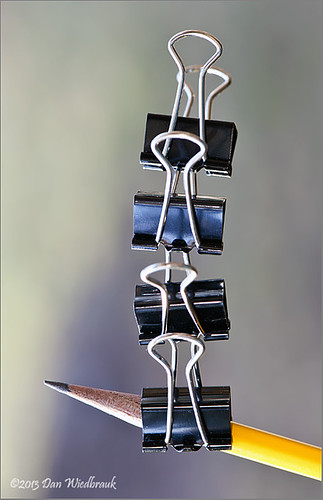
The cats, btw, love the Ace bandage. They find the wrapping/unwrapping fascinating. And the tiny little metal clips beg to be batted to the floor -- and they have been, repeatedly, even though they've only left my foot for a few hours total over the past week.

Oh, and the cats think that all the pillows i'm placing on the table/desk/etc for my foot are there for them.  Of course.

Stay true.

Margaret Atwood has been announced as the 2012 AWP Conference Keynote Speaker. This makes three out of four years where the keynote speaker has straddled the lines of literary and the Other for an organization where most of the members (if not the official organization) is conflicted in its feeling toward comic books and speculative fiction.  Sure they could say that Art Spiegleman wrote in the exciting new vein of the "graphic novel" and that Michael Chabon was a literary maverick who indulged our interests in the supernatural, but inviting Margaret Atwood to be THE speaker should be a brilliant slap in the face meant to wake up those who do not believe genre can be literary.  Don't believe me? Atwood's The Handmaid's Tale just made number 22 on that top 100 all time science fiction, fantasy list from NPR.

I always find it strange that literary types claim to have "forgotten" that Vonnegut and Orwell and Le Guin and Atwood are science fiction.

I had thought about going to the 2012 AWP conference just because it will be in Chicago, a city which is within easy traveling distance and, thanks to my brief stint living in the windy city, easy for me to navigate.  Even in fucking February.  Burr.  With Atwood as the keynote ... I think I really will have to go. 

On the Odyssey Workshop blog, bestselling author Carrie Vaughn discusses how she knows when a story will be a novel or a short work.

100 Year Star Ship project + conference.  Need I say more?

I helped plan part of a bridal shower this past weekend. And frankly, I fail to see the point.  Don't get me wrong, I'm happy to have done it for my friend and really excited to make super cute flower vases, except for the part where I was carrying a giantassbox, missed the last step and fell funny on my foot/ankle resulting in much pain and limited mobility -- but that could have happened for any reason.  But I fail to see the point of bridal showers nowadays.

My friend was astonished and flattered at the gifts she got.  She didn't expect or desire the level of gifting that occurred.  She was afraid that by inviting people to both the shower and the wedding she's making them feel like they should provide two gifts. Of course, there are people who feel like they should celebrate the union of two young people and if that means purchasing Corning Ware and Pyrex sets, then so be it.  But she and her fiance are not nineteen-year-olds who've never moved away from home.  They both have places and kitchens and kitchenware of their own.  Do we need to continue the social practice of giving showers? Particularly I ask, do we really need to gather all our female relatives for three hours of small talk, mediocre food, patronizing games, and gift opening wherein we speculate voraciously over how many ribbons the bride will break thereby determining how many children she will bear in this union?

I find the whole "bridal thing" dubious.  And I am in favor of not having one should I ever find myself in the throes of imminent marriage.  Or at least I'd rather have a co-ed "open house" rather than an all-chick shower.

Goat + duct tape + Chuck Wendig.  If that was not enough to entice you (and it should be) consider clicking through to his writing advice as well as the equally crude and wondrous birth and life of a novel.

I've realized that I have to change most of what I do this semester when I go back to teaching composition.  Okay, not most of what I do, but the big projects.  Partly because the textbook was ordered for me and the textbook supports either a gender studies or a cultural studies approach rather than a genre studies with a pop culture studies flavor.  That's okay.  Attempting a gender/cultural bent will make me more marketable. It will also be good for the students. A nice dose of spinach. I'm not entirely sold, eh?   Guess it's time to cultivate multiple talents other than teaching comp.

Ira Glass on what nobody tells beginners:
 
Ira Glass on Storytelling from David Shiyang Liu on Vimeo.

Miracle Whip wants to give you $25,000 for your wedding or divorce -- so long it's a Miracle Whip kind of romance.

And lastly, take a look at the night sky tonight.  The moon and Jupiter are teaming up for a particularly bright Jupiter tonight.  Oddly enough, I dreamed last night that I could see Jupiter.  Not Jupiter how it really is, but a nice little graphic of Jupiter with all its rings pasted onto the night sky.

Addendum: The Hugo Awards Ceremony will be streamed live tomorrow (Saturday) starting at 8:00 PM Pacific Time.

Monday, March 07, 2011

How to be a professional and a self-epublished author

Perhaps I could have titled this post simply "how to appear as a professional when you publish" and left out the distinction of self-publishing -- but presumably, if you publish with a house they are at least going to advise you on publicity if not provide you with a small amount of it.

(Not book tour publicity, but at the bare minimum all of the following information.  And most likely, they'll do some of the work for you.)

One of my good friends is a theatrical publicist who likes the same kind of fiction I do. Last week, when the Amanda Hocking headlines and chatter were strong, I mentioned the situation to my publicist friend. She read the article I sent her and began scoping out "this Amanda Hocking woman."

Speaking as a publicist, my friend declared two things to me: (1) Ms. Hocking might be making a good deal of money but she's not a professional and (2) Ms. Hocking absolutely needs a publicist.

(1) Ms. Hocking might be making good money but she's not a professional. This declaration comes from the notion that one must dress for success if one wants to succeed.  That to be taken seriously you must put your best foot forward: you don't show up to court in fluffy slippers or chew gum in front of the Queen.  When in Rome, behave in a way that makes the Romans think more of you, not try to kill you before you get back to the Tardis.

Mixed metaphors aside, what I mean is that having a web presence is not the same as having a professional web presence.

I thought about getting into a discussion of the differences between person, personal, and persona, but I think that is another post all in itself. For the sake of this post, I'll say that your web presence should not be "you" it should be your "writer-on-the-internet persona."

With that in mind, I get to things the publicist told me:

  • If you're selling something (a book, a watch, your cupcakes, your skills as an actor, tiny pieces of your soul), your presence on the internet should not be just a blog.  You must have a website.  Should you also have a blog?  That's entirely up to you.  But your blog should be in your website not in place of it.  
    • If you're working toward publication and don't have a novel to promote, then a blog is a great platform building tool. You can chat with other writers and develop connections.  And someday when you have a novel to promote, you can incorporate your blog into your website.
    • There are many free and easy ways to create a website.  Engage them.  If you're selling something (as in making money from sales), upgrade to the low level package which doesn't run ads.  The low-level upgrade on sites I've checked out like webs.com has a monthly rate that's about as much as a grande latte.  Or at very least use wordpress to create a site that looks as little like a blog as you can make it.  Unfortunately, as much as I love blogger, a blogger.com site will always look like a blog.
  • Your website should have separate pages for your publications, bio, press kit, and news.  
    • Publications: where you list and link your novels.  Use cover art.  List and link your short stories.  Use the magazine's cover art.  
    • Biography: write it in the third person.  It's a biography, not an "about me."  Look at the "About the Author" in the back of your favorite book -- it's written in the third person, not the first.*  
    • Press kit: pertinent facts and cover art for those who may be interested in reviewing, interviewing, or writing articles on you/your books.  
    • News: not what you ate for lunch.  This page should list and link all the places you've guest blogged; list and link all your favorable reviews and all reviews (favorable or not) from big venues; articles written about you/your book; places your press release has appeared; places you have or will be appearing, lecturing, signing, or teaching; and future release dates. 
  • Don't put your direct, personal, non-professional email address on the site.  "She's got her hotmail listed!" my publicist friend shrieked when she poked around Ms. Hocking's blog.  "First off, it's not professional," she told me.  "Second, you don't want that kind of email going into your personal account.  Third, it should be going through a publicist or agent or at least your mother."  Then she amended the statement further: even if you-the-author manage this account, it shouldn't be your main account and it shouldn't sound like your main account.  It needs to sound professional because it's @authorname.com (not @hotmail or @gmail or @yahoo), and it should be something like contact@authorname.com or publicity@authorname.com or the like.  Something that does not suggest OMG we can be bffs if you stalk me and send me a :) email after you finish each chapter of my book and an lol mssg after each of my #CharlieSheenIsAnAss tweets!

(2) Ms. Hocking absolutely needs a publicist.

Lastly, hire a real publicist.  No, don't run out and do it now.  But if you find yourself in the prized position of having local and national news media interviewing you and reporting on your success, or if you find yourself getting nominated for national awards, then don't try to do it all yourself.

A publicist is not like a personal assistant; she takes on many clients at once so you don't have to have oodles of work for her to do all the time.  But for a media blitz, she's worth having around.

Ms. Hocking posted last week that she had spent several days doing nothing but answer emails, and it frustrated her because it was taking time away from her writing.  Hopefully that made her see that she needs to hire help (at least temporarily) to deal with her sudden fame.

A real publicist would advise her on all of the above and more.  A real publicist would weed through the emails.  A real publicist would provide someone for the press to contact instead of contacting the author directly and having honest-to-god interview requests getting mixed in with fan/stalker/plz-tell-me-the-secret-of-your-success emails and ignored for lord knows how long.  Most importantly, a real publicist would take care of publicity and let the writer have time to write.

Photo credit: madaise

*Where a bio should be written in the third person, I've been assured that a blog's "about me" should be in the first person. Your choice between the two depends on what persona you want to bring to the table, a professional writer with published novels, or a personable blogger writing about her journey.

Tuesday, March 23, 2010

Around the Web

I may or may not have mentioned on this blog that I'm also working on the Third Coast magazine blog. I am very excited to have our latest feature up and running (at last!): literary guest bloggers!

Our first guest blogger is Erin Fitzgerald who writes the blog "Rarely Likable" and edits the Northville Review. She's written a lovely post for Third Coast about how (and where) to jump in to the world of literary magazines. It's chockablock with links to databases, sites and services for writers looking to learn and publish -- some of which I'd never heard of! (Very thorough.) Below Erin's guest blog entry is also a review of her short fiction.

I'm in contact with other writers/bloggers about future entries but, by all means, let me know if you have a nomination or suggestion.

The other nice thing that is going on over on the Third Coast blog is a series of monthly post by one of our fiction interns Nathan Norton. He's writing about some of the pitfalls of writing that he sees while reading slush and how writers can avoid them.

Tuesday, October 27, 2009

In love with an essay

Check out Alexander Chee's essay "Annie Dillard and the Writing Life." I'm in love with this essay. I plan on saving it and giving it to my creative writing students to read ... when I eventually have creative writing students to whom I assign readings.

And, interestingly enough, Dillard, though Chee, finally articulates a reason for literary writers disliking gerunds. Previously it had been one of those "just avoid such-n-such" rules that I had headed but not understood.

Monday, January 19, 2009

Life

Yesterday, I turned in my first story for workshop. Among the many items of good news arriving with this semester's workshop is that we turn in stories on Sunday then discuss them just three days later in workshop. Last semester we turned in stories then discussed them eight days later. The extra procrastination time is really appreciated. Particularly as I didn't actually mail it out to my class until 2:40 am.

This may sound so intuitive that it's not worth typing here: but I am resolved to turn in only stories I like. Stories that I have fun with. Stories that feel good to me at the end.

So much of last semester was focused on stories that didn't involve a change and I think it got to me. If nothing changes then the huh, cool emotion you get at the end has to be HUGE otherwise it's just mind numbing. So I'm writing stories where stuff happens. Where people change because of things that have happened in the story. Basically, the stuff I aspired to write when I started out writing stories. Stories with plot.

Oh, plot, you dirty little four letter word.

I don't believe in writing stories that start from plot, but from characters. This means that I'm creating characters that act on each other to make things happen in the story. Characters making plot. Opposed to starting off with actions that I inflict on my characters from things seemingly outside their control. Plot shaping characters. However, I don't think that from characters means that there shouldn't be a recognizable plot by the time the reader finishes reading.

When someone who's read my story gets asked "So what happened in the story?" I don't want them to say, "I really don't know. Just two guys in a shop, really."

Read my workshop draft -- which is is not two guys in a shop -- here.

I learned a valuable life lesson this weekend: don’t pan fry a cucumber.

I was making pasta salad and had chopped up a red pepper, orange pepper, a white onion and some cucumber. The pasta salad had to sit up over night so I was also making a shrimp stir fry for immediate consumption. I looked over at the unseasoned, already chopped into nice bite sized pieces of vegetable and thought, great! Two birds one stone! When I looked I saw the peppers and onions but the cucumber slipped my mind ... until I bit into the stir fry. Mmm ... uhoh.

Don’t pan fry a cucumber. Consider it a public service announcement.

Today is Martin Luther King day which means there's no classes at the University. Somehow I don't think a day without school was how Rev. King wanted to be remembered. The administration justifies it that this way anyone who wants can attend the events and commemorative services put on around campus without having to choose between class and event.

Despite the fact that my 8:00am teaching gig is canceled, I'm still up before dawn. Today the kittens go to the vet for declawing. I tried to not go there. But here's the deal: Ash has started scratching the walls. Not just corners -- the most prominent of which are now covered from ground level to hip height with tinfoil -- but all walls not covered by furniture. It's an awful noise, and it's taking the paint off the walls. Paint I don't own. Walls I don't own. Yet paint and walls I will have to pay to fix.

But it was when she took out her first chunk of drywall -- technically a 3" gouge -- that I called the vet for the appointment.

Animal rights activists may call it cruel, but these cats are spoiled. Spoiled from the tips of their whiskers to the fur between their toes. They are indoor only cats whose greatest struggle in life is waking me up at 6:00am to feed them.

The 6:00am feeding is done in a zombie-like state. Saturday morning was particularly comic, or at least I think it would have been if I had been awake enough to witness it. The alarm rang. Ash was already sitting by the pillow, her little internal kitty-clock telling her that it was just about time. Before she could start batting at my shoulder or attempting to clean my hair (which is an awful slurping noise to have anywhere near your ear) I clomped out of bed. My limbs heavy and half numb. Maybe they really were numb. I have a vague recollection of my left arm not responding to anything because it had been slept on. I got into the kitchen without stepping on the cats -- a feat in itself as they like to run in front of me in one directions then tack like a sailing ship the other way. I grabbed the kibble off the top of the fridge. Except I didn't grab the bag, I grabbed the tupperware-wannabe container (oops, forgetting to FIFO in my sleepiness). The container lid pops off and the kibble pours in the vicinity of the bowl. I dump too much in the first bowl and don't bother with the second. A few dozen pieces hit the side of hte bowl and scatter into the living room.

Both cats stare at me. This is not how it's done, they say. Ash recovers first and shoves her nose in the bowl before I've pivoted to head back to bed. Rosie's still watching me. Probably out of fear for her tail getting stepped on.

When I get out of bed for the second time, 10:00am, a much saner time for Saturday morning. All the stray living room kibble is gone and the bowls have been licked clean.

The best part of this early morning feeding is that the cats don't attack me. Ash doesn't wash my hair when she's been fed. She doesn't scratch the walls around my bed to get my attention (despite the fact that attention normally comes as loud claps, hey! or a pillow launched in her vicinity. Instead, when I woke up at 10:00am, Ash perched on my chest to be petted and Rosie curled up under my left arm putting her chin on my shoulder.

It was purring in surround sound.

Thursday, December 04, 2008

Grading Hiatus

So I should be grading like mad. Instead I'm feeling under the weather. Yuck.

So instead of thinking about my grad class projects, I'm trying to plan my trip to the AWP conference in February. The first hotel's already sold out. I know people were talking about getting hotel rooms in "cheaper" areas, but, as someone who has lived not four blocks from the Hilton on Michigan Ave., I would like to caution everyone: February in Chicago is cold and dark and, while New York may be the city that never sleeps, Chicago has a strict bedtime. The Loop empties out by 7:oo or 8:00 pm on weekdays and in the winter the tourism isn't alive enough in the park district to make up for the businessmen leaving.

Yes, there will be young people on the L at night as they travel to bar hop and party, but the streets get fairly deserted save for the people who live on them. Places that are cheaper may be far away from public transportation stops or require transfers.

And people who think they'll just drive need to know that parking is at least $30 a day in the surface lots and that your hotel doesn't give free parking with your room; you need to buy that car a place to sleep too.

Monday, October 27, 2008

Constructive Critisim

Mitchell and Webb - Write this..or that..or maybe


My story gets workshoped tonight.

All my energy is being consummed on projecting positive thoughts and emotions into the void so that perhaps that energy will reflect back onto me this evening. ... That sounds way more shissy-foo-foo than I would ever admit to being.

Tuesday, August 12, 2008

How to Take Rejection

If you take a look at the time stamp on this entry you had better believe what you see. It's 6:50 am and I've been awake for almost two hours -- something I haven't done since I stopped working the morning shift at the coffee shop. The reason for my early morning exuberance is that today I am the person solely in charge of getting the garbage to the curb before 7:00 am so that the recycling guy doesn't go off on my ass. Seriously. 7:30 does not cut it even if you don't try to put out the recycling because you're obviously too late and you just want to leave the garbage. Yelling will occur.

So I managed to wake myself up at 4:45 am because I was so worried about the fricking trash hitting the curb at the right hour. At 5:15 I figured what the hell, I'm awake, and got it over with. Now the sun is just pushing over the trees and it's feeling very morning-like. Kinda nice actually.

On the topic of publication, submissions and rejection I've been editing and shopping around my poetry again. I don't think of myself as a poet but it keeps me moving.

Nannette Croce recently posted this wonderful article where she tells it like it is about rejection slips and what they really mean and which ones should make your heart flutter with joy and which ones tell you you need to move on to a different magazine.

Meanwhile I got a throwaway little red slip from the Mid-American Review (print). MAR was smart and took a page out of credit card companies books and in my SASE they sent not only my rejection slip but a plug for subscribing to the magazine, a plug for their upcoming conference/workshop, and a plug for something else which I cannot recall. Pretty damn smart way of both targeting your audience and getting someone else to pay for postage! I am in awe of their cunning!

Then there's Dennis Cass, who likes to drop his suggestions for your life and your public persona as a writer. I guess that's okay since he only "wants you to be more awesome." His take is that writers should not blog about rejection if they want to be more awesome because it's completely negative. Additionally, when blogging about rejection (particularly rejection of book length manuscripts) many writers get snitty and mean about the agents/editors sending the form letters. Actually there's an entire site (an entirely ludicrous site) devoted to reading things into form rejection letters and making up gastrointestinal problems that the editors have which caused them to write such cruel sentences like "this isn't right for our publishing needs." The fact that people take offense at these form letters completely boggles the mind: the world does not revolve around you to the degree that people who have never met you care about you enough to hate you. The website is complete crap -- but more than a little like watching Jerry Springer. You can read another (thankfully sane though extremely frustrated) reaction to it here.

Anyway, I think it was David Cass that suggested that there were a couple-three ways of doing rejection tales well. And perhaps the "Epic of Rejection and Publishing" would be the way to go. I'll work on an introduction shortly, because epics can't begin in the middle.

Friday, February 15, 2008

What are MFA programs basing their decisions on?

Because this was a really good question I decided to give it its own post and push back my short review of my last three reads until tomorrow.

Applicants are asked to submit undergraduate grades, a statement of purpose, three letters of recommendation preferably one or two who have been your prior writing instructors, and the all important writing sample. Some schools ask for GRE scores but those are mostly a formality for acceptance into the Graduate School not the actual writing program. Sometimes they ask for a CV, for secondary essays on your "personal journey"* that brought you to that school or for your teaching philosophy to determine whether you'd make a good TA.

*Aside: My all time favorite is the "personal journey" essay, because after you write it you get to hold hands and skip, then the applicants take turns falling backwards into each other's arms -- all because they've found themselves through their personal journey essay. Ahem.

Despite all these collected bits of information, acceptance is based almost entirely on your submitted writing sample. For fiction programs that means two short stories totaling 25-40 pages (depending on the program). They estimate the writing sample is 75-90% of the admission criteria. Because if you can't write then it doesn't matter that you had a 4.0 from Harvard.

In the November/December Poets&Writers Magazine, there was an article titled something like "Confessions from a former application reader," in which it was stated that the preliminary reader of the application goes straight for the writing sample. If the sample fails miserably nothing else in the application packet is considered. A successful writing sample is generally a demonstration that the applicant is a storyteller. The program isn't looking for fancy technical work because that's what the program is there to teach, they're looking for potential. Again, prior publication isn't necessary because that's what the program hopes to help get you in position for. Another plus always seems to be the ability to establish a strong voice within a short piece, particularly if it is unique to the writer. The kiss of death, however, comes when applicants attempt to copy the voice of published faculty at the program thinking that they're working to flatter. Usually the unnatural assumption of the new voice does more to destroy the story and flatters the faculty like a muumuu.

Applicants get shuffled into "piles" by the preliminary reader and the better ones are then reviewed by a committee, often made up of faculty, program director and occasionally current MFA candidates. Some programs go straight for the committee and skip the preliminary reader. In committee, the writing sample once again reigns supreme. Borderline students are considered in light of their other submitted materials.

Of course, this is not to say that having a lousy undergrad GPA doesn't matter. Most schools require a 3.0 or higher and significant coursework in English or equivalent experience in writing outside of the classroom.

The focus on the writing sample makes the review process extremely subjective, not unlike the publication process -- so, in that respect, it's very fitting -- and almost the complete opposite of the law school application process, which is based entirely on the numbers game (GPA, LSAT, class rank and undergrad school ranking). But at the same time that subjectivity makes it that much more personal: you are allowed to be viewed not just as a name and a number but as a writer with potential for growth. On the flip side, it also makes rejection that much more personal, but we're trying not to think those thoughts just yet.

Note: My answer is gleaned from myriad sources; it is not first hand information and is in no way the definitive answer for any one program.

Tuesday, January 15, 2008

Note to schools offering MA/MFA programs in creative writing:

Fact: most MFA programs have no trouble attracting a full class of students. When a full class is only 6-25 people one would hope that to be true.

Fact: most MFA programs refuse to mail instructions or information to applicants and instead refer everyone to their website.

That being said I have a list of suggestions (pet peeves) to make these websites more efficient.

  1. Make your website easy to navigate. Links that lead to a listing of every graduate program offered to find your deadline are not efficient. I don't care when the Genetics or the Computer Science deadline is. Face it, neither do you. Put your damn deadline on your own damn page.
  2. Better yet, make all the forms and steps easy to find and access. (Read: a list that actually links to forms, not to another list.)
  3. If there are separate forms to apply to the grad school and to the individual program, state that in explicit language. If you harp on the fact that duplicate electronic and paper submissions should NOT be made pay particular attention to this.
  4. Have a place to upload all materials if that is your thing. It consolidates. If your program has a web page with a secret address that will be sent to the applicant ten days after submitting the electronic application so that she can upload her final documents and writing sample to you please MENTION THIS before she promptly sends you paper copies the day after she submits the original application. Better still: mention it on your website period.
  5. If computers and webpages aren't your thing, then don't change the web content yourself: hire one of those Computer Science students whose program deadline you sent me to earlier.
  6. Don't rely on prospective students calling or emailing to resolve these problems. If we don't think we have a problem we see no need to call you as you discourage us from ringing just to chat.

I spent four years working as an IT intern for my undergraduate institution ... I'm beginning to think they use this maze as the first round of weeding people out. If you're not dedicated enough to spend hours at their website clicking dead end and misdirected links then you don't have the staying power to be grad student?

What prompted all this? I received an email yesterday asking me to fill out the English department's application form and mail it back to them as I had forgotten it. Please see No. 3.

When all is said and done who wins the prize for easiest application to complete? The University of Notre Dame. Their entire application right down to the writing sample must be uploaded via electronic submission on one (count it: one) website. Their only downfall: the English department website listed an incorrect page count for the writing sample. However a quick email to the address listed resulted in a prompt email telling me that the error had just been pointed out and that the number on the creative writing department page was correct. Mad props guys, mad props.

The University of Michigan comes in a close second but only because they want you to mail a paper copy of the writing sample but upload everything else. And if I got that wrong see above list of reasons for it not being my fault.

Thursday, December 13, 2007

Recommendations: Books on Writing

Whose Christmas list would be complete without some great writing guides? So tell Santa you've got one more addenda and send him the titles of some more great books (and avoid the others). This is not to exclude the non-Christians and non-Commercial-Holiday-Gift-Buyers-who-don't-go-to-church ... come on, I know you've got a gift card floating around your house somewhere.

Bird by Bird, by Anne Lamott. The best guide to writing for new writers I can imagine. Lamott does it with humor, does it with pluck and spunk. She also serves as a calming presence. Just the story of where the title bird by bird comes from is calming. Lamott also depicts herself as so fabulously neurotic that she will make you feel sane by comparison. All around, she leaves you with a good feeling about yourself as a writing and a bag of tools to use to get you to the next level. It's been out for 12 years now so your local library probably has a copy too.

The Art of Fiction: Notes on Craft for Young Writers, by John Gardner. A Goliath among writing guides, The Art of Fiction is a must ... eventually. DO NOT be fooled by the subtitle, the book is not for teenagers or even the fledgling writer. As a teenager I would have found Gardner's writing deadly boring, but even if I had been able to make it through his writing style I am glad I did not. Gardner presents a great many thoughts that are destructive, harsh and even cruel about certain types of writing. And the fledgling writer, or even a more established writer that is unsure of himself is apt to find this book crushing of their spirit and drive to continue. Recommended prerequisites for reading The Art of Fiction: (1) a firm sense of self as a writer, and (2) the ability to admit that the author can be an ass and yet still have some good advice buried under pomp. Gardner really does come across as a jerk, particularly in the first chapter, but if you realize that you don't have to take his attacks personally and that you don't have to agree with his value system, then he's the kind of jerk you can get along with. Side note: he also uses terms that are not employed in modern workshopping such as "yarn" to refer to a specific type of writing. I, however, cannot tell the difference between a "yarn" and a "tall tale," bravo for you if you can.

From Where You Dream, Robert Olen Butler, edited by Janet Burroway. This book came from a series of lectures Robert Olen Butler gave. He had been urged to write a guide on writing but refused. Instead, he agreed to have someone transcribe these amazing lectures that he gives to groups of writers. The result is less preachy than some other guides and much more organic. Both qualities lead to a pleasant read. Break this one out to gain some insight about yourself as a writer. It is, however, a little more ethereal than practical; more of an experience than a how-to manual.

The Lie that Tells a Truth, by John Dufresne. This was assigned for my senior thesis seminar. My professor loved it. But there were a couple of us that struggled with it. We in fact found it so distracting and disconcerting that we were excused from doing any further assigned readings in it. What I do know is that Dufresne's approach is to immediately give you writing exercises and then talk about it. This is directly contrary to Gardner who labors on and on about writing, casually mentioning exercises he might assign his students before actually giving them to you in the appendix. However, Dufrense doesn't just explain the exercises, he tries to hold your hand through them. I'm not a hand holder. I don't appreciate it. Unless you're my boyfriend, and even then there's limits.

I know I have read Triggering Town, but for the life of me can't remember a single thing the man said. I believe that description leaves little room for interpretation.

I fully intend to read Writing Down the Bones in the near future as I have heard many good things about it but have never cracked it open myself.

Something of an oddity on a list like this: 45 Master Characters: Mythic Models for Creating Original Characters, by Victoria Lynn Schmidt. It's an oddity perhaps because it's geared toward genre writers and using the text as a tool to turn out salable narratives. However I've been using it for years as a means to thinking about "what comes next" for my characters. It's Joseph Campbell's Hero with a Thousand Faces (which is great if you want a soc./cultural read) but made specifically for writers ... with pictures. Yes, pictures.

And lastly, I recommend Words Fail Me, Patricia O'Connor. This isn't a book on fiction writing, it is a guide to practical, coherent, grammatically correct writing. It is Strunk and White's Elements of Style for those of us who think the Strunk and White version is dull and boring and would much rather use that slim little volume to even out a wobbly table leg than read the Elements of Style cover to cover. Words Fail Me is highly recommended if you have a teenager/college student who needs some help. The examples are good and the prose is always readable and often hilarious.

Tuesday, November 27, 2007

MFA Statement of Purpose

I've been taking swings at my statement of purpose for a Masters of Fine Arts in Creative Writing for a few weeks now. Finally, in the last week of November, I'm getting serious about it. Why now? Because I promised myself I'd have all these technical pieces finished by Dec. 1 (one month before my earliest deadline). So it's crunch time.

Helpful resources I've found in my search:

"How to Write a Great Statement of Purpose," Vince Gotera
Practical how-to advice for a MFA statement of purpose:
http://www.uni.edu/~gotera/gradapp/stmtpurpose.htm

"A Purposeless Statement?" Peter Derby
A little more theoretical advice, but necessary to make you step back and realize there is no magic words that can unlock your MFA:
http://chronicle.com/jobs/news/2006/12/2006121301c/careers.html

As always the MFA Blog has some good tips:
http://creative-writing-mfa-handbook.blogspot.com/2007/08/tips-on-statement-of-purpose.html

And if you're interested, M. Ramirez Talusan from the MFA Blog, has posted her old statement of purpose online:
http://mramireztalusan.blogspot.com/2007/11/mfa-statement-of-purpose.html

Their advice in summary? Don't bad mouth people, write like a professional not an artist for the essay, tell a captivating story or tell about your writing interest if it is more captivating than you are. Oh and say specifically why the hell you're crazy enough to go to get an art degree in writing.

Tuesday, November 20, 2007

Keep Writing!

I once dated a guy who claimed he was on the verge of the next Great American Novel (dispelling the myth of the 'Great American Novel' will be a later entry). He told me he had planned the whole thing out in detail. Plotted it meticulously. Developed characters that the critics were going to love him for. With such great insight into the human condition that it would be on reading lists long after his death. Except this was all in his head. He hadn’t written down a single word.

I pushed for him to write it. To write anything. I even threw my weight behind it both as girlfriend and as fellow writer, but he wouldn’t listen. He wouldn’t even discuss it with me other than to tell me it would be great and talking about it would ruin his vision.

To this day, I’ve never seen him publish anything. Anything.

I don’t tell this story to upset or to discourage. I tell it to reinforce that if you want to write there is a necessity of actually writing. No one runs the Boston Marathon just because they’ve been thinking about it without getting up and running every morning for months before hand. You have to get over whatever is keeping you from running -- your ego, your inexperience, your bad knee or your schedule -- and hit the pavement.

The best advice anyone can give to those who want to write is to write constantly. The second best: don't be afraid to talk about it. Constructive criticism and feedback are very important to learning any new skill. And no one, no matter how great a writing, ever publishes without accepting both criticism and feedback.

But first you need to keep writing. Think of being on that morning run again: it's easier when you're already in motion than when you are starting from a complete stop. The second mile is much easier to start than getting off the couch ever is. Once you decide to write, and write for writing's sake there are ways to trick yourself into writing more. Just like there are ways to trick yourself into running further when you're out on the pavement.

1. Keep paper on you always, I have a thin little pocket notebook perfect for my back pocket. (People keep asking me if I’m a reporter and if I’m feeling spunky I tell them yes.) Write down anything interesting you think or hear or see. I’ve got a great description of the bum who lives on my corner and a transcribed conversation between three hicks about the end of the world all because I kept my eyes and ears open and paper in my back pocket.

2. Keep a journal. Keep five. Anything that makes you write. I have one journal that is notes on my own life, not very useful for stories but cathartic. Another is ideas for fiction. A third is made up entirely of single lines that rattled around in my brain and would not stop bothering me until I gave them space on paper. It might not be a good space, or the right space but I will find that someday and in the meantime I don’t let myself worry about their rhyme or reason. A fourth journal I use for notes on humorous subjects that I might want to blog eventually. My father keeps a journal entirely based around recipes he finds and his experiences making them. You get the picture.

I've read that there's a school of thought that you need to keep at least one handwritten journal so that you can stay in touch with actual "writing." I think this is a bunch of bull. Do what feels right for you. If labor intensive longhand slows down your process then forget it. If you can't type to save your life then use a pad of paper and pay the neighbor kid to type it up later. NO ONE has the upper hand on method; it is, after all, an art not a science.

3. If you struggle with getting to the point where you write for the sake of writing constantly, then take a class. You'll also get that much needed chance to talk about your work. Writing workshops aren’t just for college students. They’re popping up around the country, in city recreation programs, community colleges and bookstores nationwide. And if you still can’t find one there’s always the internet and low-residency MFA programs. Also available are week or weekend long workshop retreats. I went to the Kenyon Review's workshop and loved it. All these options present deadlines. Deadlines are an amazing thing. Some times you really do just need a boot to your behind to get you going. See Poets&Writers for listings of writing programs and conferences and residencies.

4. If you possess more discipline and can do it on your own then set aside time to write each day. Or maybe you want to begin with setting aside a few hours Saturday morning to work yourself into it. Mornings or evenings doesn’t matter, but whichever you choose make sure it is something that you are not going to trade for time to sleep or do laundry when push comes to shove.

In the end, these ideas are all just suggestions to trick yourself into writing. Everyone’s different and maybe something else will work for you. But there is one sure fire way to fail at writing: by not writing. Remember that old boyfriend of mine? He’s only ever written one short story, and, last I heard, still not one word of that supposedly great novel.

Highly Recommended