The Kenyon Review is closing its reading period four weeks earlier than planned!
Meaning what? That all of us who procrastinated will be screwed come Jan. 5 not Jan. 31.
Although at this point (where they've already placed stories for Summer 2009) what are your odds of making that Summer 2009 cut? I think I might just have to save and polish my pieces for when they reopen their reading period Sep. 1, 2008.
Kenyon Review Writer's Workshop is still accepting applications. Apply for the the most amazing week of writing ever! Okay, I'm biased, but I had a really good time in '07 and hope the program does just as well in '08. Oh, and I also hope that I can attend, but I'm willing to skip Kenyon if I can spend my luck on an MFA acceptance letter. *Hopin' n Prayin'*

Monday, December 31, 2007
JanNoWriMo: the craze sucks in another soul
Have you heard about these things? "NaNo" months, as they're called, are month long novel writing marathons. The biggest one (and the original so far as I can tell) is NaNoWriMo or National Novel Writing Month. NaNoWriMo challenges participants to write a 50,000 word story/novel/novella entirely within the month of November.
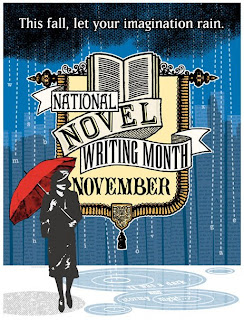 To support and encourage this flurry of writing activity is an online community of, you guessed it, message boards. And NaNo even provides weekly email pep talks. There's even a one day fund raiser called "The Night of Writing Dangerously." These guys seem to have a great sense of humor but are, like all marathoners, crazy.
"Winners" are anyone who crosses the 50k finish line and get their own special icon to post on their blog/myspace/facebook/whatever. Who's to tell if you win? Well, no one honestly. Whether you download the winner's certificate or not is completely on the honor system. But Rah! Rah! you if you do it.
 You may recall this lovely little yellow graphic sitting in my blog earlier this year. This past November I discovered NaNo for the first time despite the fact that it has been around for several years. Discovered it on November 20. I did not attempt to finish 50k in the ensuing ten days. Sorry, no winner's certificate for me.
Apparently these things are so thrilling and enthralling that there are other communities and other websites ready to roll with their own marathons allowing crazy writers their choice of month or the choice of attempting all of them. Hey, why just run Boston when you can run Chicago too? JanNo, JulNo are among the more prominent in existence as well as Screenwriting Frenzy and WriYe for year long writing goals just incase one month is too short sighted for you.
 JanNoWriMo begins, unsurprisingly, January 1, 2008. And it has claimed this soul as one of it's crazies: Mine.

My cute word count ticker ready to go (now if only I understood the ticker technology better I wouldn't have to make a new one each time I updated ... or maybe it's not me and it's just that the ticker site is not user friendly).

 To support and encourage this flurry of writing activity is an online community of, you guessed it, message boards. And NaNo even provides weekly email pep talks. There's even a one day fund raiser called "The Night of Writing Dangerously." These guys seem to have a great sense of humor but are, like all marathoners, crazy.
"Winners" are anyone who crosses the 50k finish line and get their own special icon to post on their blog/myspace/facebook/whatever. Who's to tell if you win? Well, no one honestly. Whether you download the winner's certificate or not is completely on the honor system. But Rah! Rah! you if you do it.
 You may recall this lovely little yellow graphic sitting in my blog earlier this year. This past November I discovered NaNo for the first time despite the fact that it has been around for several years. Discovered it on November 20. I did not attempt to finish 50k in the ensuing ten days. Sorry, no winner's certificate for me.
Apparently these things are so thrilling and enthralling that there are other communities and other websites ready to roll with their own marathons allowing crazy writers their choice of month or the choice of attempting all of them. Hey, why just run Boston when you can run Chicago too? JanNo, JulNo are among the more prominent in existence as well as Screenwriting Frenzy and WriYe for year long writing goals just incase one month is too short sighted for you.
 JanNoWriMo begins, unsurprisingly, January 1, 2008. And it has claimed this soul as one of it's crazies: Mine.
Sadly, it's icon is no where near as cool as NaNo's but I guess that's what happens when one is funded and the other isn't.
I begin Jan. 1 on my 50,000 word quest. Which gives me 24 hours to decide if I want to write something from scratch or add 50k words onto an existing story.
I encourage you to join me. Because crazy should stick together.
My cute word count ticker ready to go (now if only I understood the ticker technology better I wouldn't have to make a new one each time I updated ... or maybe it's not me and it's just that the ticker site is not user friendly).

Monday, December 17, 2007
Write in the Snow
If you grew up around snow you've undoubtedly written in it at some point. I always chose to do so with a stick or fallen branch, some used other means. But this post isn't about who can best write their name in the snow.
 This is the world I've been living in for the past two days. (See pictures.) Despite the fact that 12" of snow fell on my house in under 48 hours the national weather guys (well, Good Morning America) don't really seem to think I'm worthy of mentioning. Instead they focused on parts of New England that received the exact same amount of snow. I console myself by the fact that considering who the guests were on GMA today I'm happy not to be mentioned among them.
 Most cities around me received only 8". The south side of town only got 10". But me? I went big. But once you get 8" in 24 hours what's another four? Either way, you're better off staying inside and eating whatever lives in the back of your cabinet than going outside to make friends with two truck guy. Instead just sit tight and wait for your burly, but handsome and charming, neighbor to come shovel your sidewalk for you. (I'm still working on acquiring such a neighbor.) This picture is my path, foolishly shoveled at the 9" or 10" mark. As you can see there's already more snow fallen on what was cleared cement about a half hour before.
 1. There's only so long you can play in the snow before you turn into the snowman in the Campbell's Soup commercial. Come inside, get your soup, and write something productive.
 3. It's ethereal. Falling snow does strange things to the sunlight. It makes you feel like you should be somewhere else, floating outside along with it, not trapped in your own mind or body. Just watching it you're halfway to connecting with your subconscious.
 6. It's going to be a long, cold winter. I have no science to back this up. The weathermen haven't told me and no news company is willing to put their stamp on that fact -- they're all still reeling from calling Florida too early in 2000 to call anything before the final count. But I'm going out on an icy limb and saying it: long, cold, not over anytime soon. The past couple winters have been nice, mild treats. Now we dig in. Make sure to stock water, canned goods, and extra paper so you're not bored.
 9. Writing prevents you from kvetching about the snow. I know, I know, it's your favorite pastime. You and everyone else around here. And if you like snow you've learned to keep that to yourself, but you know that your complaining companions are too grumpy and caffeine deprived at the moment to wonder at the little smile on your face. The smile is more productive. What's even more productive? Writing! (Good guess on your part, by the way. You're catching on to the pattern.)
 This is the world I've been living in for the past two days. (See pictures.) Despite the fact that 12" of snow fell on my house in under 48 hours the national weather guys (well, Good Morning America) don't really seem to think I'm worthy of mentioning. Instead they focused on parts of New England that received the exact same amount of snow. I console myself by the fact that considering who the guests were on GMA today I'm happy not to be mentioned among them.
  Most cities around me received only 8". The south side of town only got 10". But me? I went big. But once you get 8" in 24 hours what's another four? Either way, you're better off staying inside and eating whatever lives in the back of your cabinet than going outside to make friends with two truck guy. Instead just sit tight and wait for your burly, but handsome and charming, neighbor to come shovel your sidewalk for you. (I'm still working on acquiring such a neighbor.) This picture is my path, foolishly shoveled at the 9" or 10" mark. As you can see there's already more snow fallen on what was cleared cement about a half hour before.
 I look now for reasons to write in the snow. You might think they are obvious but procrastination is a fine art. One that many of us have mastered at a young age and have yet to overcome.
 1. There's only so long you can play in the snow before you turn into the snowman in the Campbell's Soup commercial. Come inside, get your soup, and write something productive.
2. It's inferior snow. You can sled in this snow or ski. But you couldn't make a snowball or snowman if your life depended on it. Wait until February for the good packing stuff.
 3. It's ethereal. Falling snow does strange things to the sunlight. It makes you feel like you should be somewhere else, floating outside along with it, not trapped in your own mind or body. Just watching it you're halfway to connecting with your subconscious.
 4. There's a sense of lethargy, a lack of urgency that accompanies the kind of snow that traps you indoors. Curling up in an ancient sweatshirt and watching Christmas movies is just as lovely a feeling as writing another thousand words ... except if you write you have something to show for it at the end, if you watch White Christmas again for the umpteenth time you're just that much more capable of completing Danny Kaye's sentences.
5. If the Christmas season is magical then anything you write during it will have some magic of its own. It's kinda like that old silk hat they found. (Okay it's a stretch, but so are most movies on Lifetime and they're still in business.)
 6. It's going to be a long, cold winter. I have no science to back this up. The weathermen haven't told me and no news company is willing to put their stamp on that fact -- they're all still reeling from calling Florida too early in 2000 to call anything before the final count. But I'm going out on an icy limb and saying it: long, cold, not over anytime soon. The past couple winters have been nice, mild treats. Now we dig in. Make sure to stock water, canned goods, and extra paper so you're not bored.
7. It's cheaper than snowboarding lessons. (Ouch.) And you're not as sore afterward. (Oof.)
8.If there was an alien race trying to take over the Earth and the snow was really just a part of their master plan of destruction and doom, wouldn't you want to have written your novel before Jeff Goldblum convinces the President that eminent danger is lurking? (Work with me here, I'm trying to get to number ten.)
 9. Writing prevents you from kvetching about the snow. I know, I know, it's your favorite pastime. You and everyone else around here. And if you like snow you've learned to keep that to yourself, but you know that your complaining companions are too grumpy and caffeine deprived at the moment to wonder at the little smile on your face. The smile is more productive. What's even more productive? Writing! (Good guess on your part, by the way. You're catching on to the pattern.)
10. Lastly, certain other forms of writing in the snow that were cute when you were a kid might just get you arrested as an adult. Best to stick to pen and paper.
Friday, December 14, 2007
I take the GRE tomorrow
The only thing in the world I have to do today is study for the GRE to learn its layout and protocol. And this one thing I have to do is the last thing I want to do.
Well I suppose there are other things that I do have to do today: like wearing clothes when I go out in public.
Well I suppose there are other things that I do have to do today: like wearing clothes when I go out in public.
Thursday, December 13, 2007
Recommendations: Books on Writing
Whose Christmas list would be complete without some great writing guides? So tell Santa you've got one more addenda and send him the titles of some more great books (and avoid the others). This is not to exclude the non-Christians and non-Commercial-Holiday-Gift-Buyers-who-don't-go-to-church ... come on, I know you've got a gift card floating around your house somewhere.
Bird by Bird , by Anne Lamott. The best guide to writing for new writers I can imagine. Lamott does it with humor, does it with pluck and spunk. She also serves as a calming presence. Just the story of where the title bird by bird comes from is calming. Lamott also depicts herself as so fabulously neurotic that she will make you feel sane by comparison. All around, she leaves you with a good feeling about yourself as a writing and a bag of tools to use to get you to the next level. It's been out for 12 years now so your local library probably has a copy too.
The Art of Fiction: Notes on Craft for Young Writers , by John Gardner. A Goliath among writing guides, The Art of Fiction is a must ... eventually. DO NOT be fooled by the subtitle, the book is not for teenagers or even the fledgling writer. As a teenager I would have found Gardner's writing deadly boring, but even if I had been able to make it through his writing style I am glad I did not. Gardner presents a great many thoughts that are destructive, harsh and even cruel about certain types of writing. And the fledgling writer, or even a more established writer that is unsure of himself is apt to find this book crushing of their spirit and drive to continue. Recommended prerequisites for reading The Art of Fiction: (1) a firm sense of self as a writer, and (2) the ability to admit that the author can be an ass and yet still have some good advice buried under pomp. Gardner really does come across as a jerk, particularly in the first chapter, but if you realize that you don't have to take his attacks personally and that you don't have to agree with his value system, then he's the kind of jerk you can get along with. Side note: he also uses terms that are not employed in modern workshopping such as "yarn" to refer to a specific type of writing. I, however, cannot tell the difference between a "yarn" and a "tall tale," bravo for you if you can.
From Where You Dream , Robert Olen Butler, edited by Janet Burroway. This book came from a series of lectures Robert Olen Butler gave. He had been urged to write a guide on writing but refused. Instead, he agreed to have someone transcribe these amazing lectures that he gives to groups of writers. The result is less preachy than some other guides and much more organic. Both qualities lead to a pleasant read. Break this one out to gain some insight about yourself as a writer. It is, however, a little more ethereal than practical; more of an experience than a how-to manual.
The Lie that Tells a Truth , by John Dufresne. This was assigned for my senior thesis seminar. My professor loved it. But there were a couple of us that struggled with it. We in fact found it so distracting and disconcerting that we were excused from doing any further assigned readings in it. What I do know is that Dufresne's approach is to immediately give you writing exercises and then talk about it. This is directly contrary to Gardner who labors on and on about writing, casually mentioning exercises he might assign his students before actually giving them to you in the appendix. However, Dufrense doesn't just explain the exercises, he tries to hold your hand through them. I'm not a hand holder. I don't appreciate it. Unless you're my boyfriend, and even then there's limits.
I know I have read Triggering Town , but for the life of me can't remember a single thing the man said. I believe that description leaves little room for interpretation.
I fully intend to read Writing Down the Bones in the near future as I have heard many good things about it but have never cracked it open myself.
Something of an oddity on a list like this: 45 Master Characters: Mythic Models for Creating Original Characters , by Victoria Lynn Schmidt. It's an oddity perhaps because it's geared toward genre writers and using the text as a tool to turn out salable narratives. However I've been using it for years as a means to thinking about "what comes next" for my characters. It's Joseph Campbell's Hero with a Thousand Faces (which is great if you want a soc./cultural read) but made specifically for writers ... with pictures. Yes, pictures.
And lastly, I recommend Words Fail Me , Patricia O'Connor. This isn't a book on fiction writing, it is a guide to practical, coherent, grammatically correct writing. It is Strunk and White's Elements of Style
 for those of us who think the Strunk and White version is dull and boring and would much rather use that slim little volume to even out a wobbly table leg than read the Elements of Style cover to cover. Words Fail Me is highly recommended if you have a teenager/college student who needs some help. The examples are good and the prose is always readable and often hilarious.
Bird by Bird
, by Anne Lamott. The best guide to writing for new writers I can imagine. Lamott does it with humor, does it with pluck and spunk. She also serves as a calming presence. Just the story of where the title bird by bird comes from is calming. Lamott also depicts herself as so fabulously neurotic that she will make you feel sane by comparison. All around, she leaves you with a good feeling about yourself as a writing and a bag of tools to use to get you to the next level. It's been out for 12 years now so your local library probably has a copy too.The Art of Fiction: Notes on Craft for Young Writers
, by John Gardner. A Goliath among writing guides, The Art of Fiction is a must ... eventually. DO NOT be fooled by the subtitle, the book is not for teenagers or even the fledgling writer. As a teenager I would have found Gardner's writing deadly boring, but even if I had been able to make it through his writing style I am glad I did not. Gardner presents a great many thoughts that are destructive, harsh and even cruel about certain types of writing. And the fledgling writer, or even a more established writer that is unsure of himself is apt to find this book crushing of their spirit and drive to continue. Recommended prerequisites for reading The Art of Fiction: (1) a firm sense of self as a writer, and (2) the ability to admit that the author can be an ass and yet still have some good advice buried under pomp. Gardner really does come across as a jerk, particularly in the first chapter, but if you realize that you don't have to take his attacks personally and that you don't have to agree with his value system, then he's the kind of jerk you can get along with. Side note: he also uses terms that are not employed in modern workshopping such as "yarn" to refer to a specific type of writing. I, however, cannot tell the difference between a "yarn" and a "tall tale," bravo for you if you can.From Where You Dream
, Robert Olen Butler, edited by Janet Burroway. This book came from a series of lectures Robert Olen Butler gave. He had been urged to write a guide on writing but refused. Instead, he agreed to have someone transcribe these amazing lectures that he gives to groups of writers. The result is less preachy than some other guides and much more organic. Both qualities lead to a pleasant read. Break this one out to gain some insight about yourself as a writer. It is, however, a little more ethereal than practical; more of an experience than a how-to manual.The Lie that Tells a Truth
, by John Dufresne. This was assigned for my senior thesis seminar. My professor loved it. But there were a couple of us that struggled with it. We in fact found it so distracting and disconcerting that we were excused from doing any further assigned readings in it. What I do know is that Dufresne's approach is to immediately give you writing exercises and then talk about it. This is directly contrary to Gardner who labors on and on about writing, casually mentioning exercises he might assign his students before actually giving them to you in the appendix. However, Dufrense doesn't just explain the exercises, he tries to hold your hand through them. I'm not a hand holder. I don't appreciate it. Unless you're my boyfriend, and even then there's limits.I know I have read Triggering Town
, but for the life of me can't remember a single thing the man said. I believe that description leaves little room for interpretation.I fully intend to read Writing Down the Bones
in the near future as I have heard many good things about it but have never cracked it open myself.Something of an oddity on a list like this: 45 Master Characters: Mythic Models for Creating Original Characters
, by Victoria Lynn Schmidt. It's an oddity perhaps because it's geared toward genre writers and using the text as a tool to turn out salable narratives. However I've been using it for years as a means to thinking about "what comes next" for my characters. It's Joseph Campbell's Hero with a Thousand Faces (which is great if you want a soc./cultural read) but made specifically for writers ... with pictures. Yes, pictures.And lastly, I recommend Words Fail Me
, Patricia O'Connor. This isn't a book on fiction writing, it is a guide to practical, coherent, grammatically correct writing. It is Strunk and White's Elements of Style for those of us who think the Strunk and White version is dull and boring and would much rather use that slim little volume to even out a wobbly table leg than read the Elements of Style cover to cover. Words Fail Me is highly recommended if you have a teenager/college student who needs some help. The examples are good and the prose is always readable and often hilarious.
Tuesday, December 11, 2007
Breaking the Addiction (edited)
I’ve become addicted to grad school forums. Particularly one on LiveJournal. Anyone with an account who adds the forum can post their nervous-Nelly fears, their less than brilliant questions, and their Statement of Purpose drafts for comment. Today I "un-friended" the forum so that I'll stop spending time there.
The state of chaos there almost makes me feel good about myself. Sometimes because I am the wise mentor figure who sooths their fretting minds, and sometimes because it is an ego boost to know that I figured out these same questions all on my own.
I may not be a nice person, but at least I’m honest.
I understand that much of what is posted is just applicants who want a second opinion about this or that -- something tiny that it’s easier to post a question about than sit and contemplate for half an hour -- and that for most of the important aspects they have already figured everything out. I do question, however, those who choose to post their Statements of Purpose (shorthand: SOP*) for strangers to critique. (1) Do you really want everyone to read it? (2) Do you really trust these stranger’s opinions? (3) Is there no one in your life who is willing to edit something that is two pages max? And then I hope that they're applying to the same programs I am because it will increase my odds of getting in.
Told ya I wasn't nice.
At this point, I have completed six of seven Statements of Purpose (and not posted a single one for strangers to read). I have chosen to apply to six schools, so why seven SOP? Because one grad school has decided to weed out the weak of heart by adding a second, "personal journey" SOP. After I complete it I get to hold hands with the other applicants and sing kum-ba-ya until we all feel the trust and love that comes with sharing our personal journey with the strangers of an application committee.
But that is on hold, singing and all, as I piece together my writing sample (read: 25-30 pages of fiction) for my two December 15 deadlines.
The best part about getting an MFA? The deadlines. People say it again and again, that the artificial pressure to get your writing done is extremely helpful because it means that you have to make writing a priority in your life. I haven’t even gotten in to an MFA program – I haven’t even applied yet! – and already I feel the power and benefit of deadlines. Two stories that had languished since Summer are now getting careful reviews and revisions. They are lovingly being brought into maturity to become part of my writing sample by week’s end.
Would this have happened so quickly without the outside deadline? I suspect not.
*Note: When I first read “SOP” I immediately thought Standard Operating Procedure. Apparently I am the only grad applicant that thinks in military terms first.
Edit: Of course, about a year after posting this, I posted my SOP here on my blog where anyone could see it. But at the time I put it online, I was already attending an MFA program, and I posted it here on my blog, not on a forum where I asked for a critique. Hypocritical of me? Maybe.
The state of chaos there almost makes me feel good about myself. Sometimes because I am the wise mentor figure who sooths their fretting minds, and sometimes because it is an ego boost to know that I figured out these same questions all on my own.
I may not be a nice person, but at least I’m honest.
I understand that much of what is posted is just applicants who want a second opinion about this or that -- something tiny that it’s easier to post a question about than sit and contemplate for half an hour -- and that for most of the important aspects they have already figured everything out. I do question, however, those who choose to post their Statements of Purpose (shorthand: SOP*) for strangers to critique. (1) Do you really want everyone to read it? (2) Do you really trust these stranger’s opinions? (3) Is there no one in your life who is willing to edit something that is two pages max? And then I hope that they're applying to the same programs I am because it will increase my odds of getting in.
Told ya I wasn't nice.
At this point, I have completed six of seven Statements of Purpose (and not posted a single one for strangers to read). I have chosen to apply to six schools, so why seven SOP? Because one grad school has decided to weed out the weak of heart by adding a second, "personal journey" SOP. After I complete it I get to hold hands with the other applicants and sing kum-ba-ya until we all feel the trust and love that comes with sharing our personal journey with the strangers of an application committee.
But that is on hold, singing and all, as I piece together my writing sample (read: 25-30 pages of fiction) for my two December 15 deadlines.
The best part about getting an MFA? The deadlines. People say it again and again, that the artificial pressure to get your writing done is extremely helpful because it means that you have to make writing a priority in your life. I haven’t even gotten in to an MFA program – I haven’t even applied yet! – and already I feel the power and benefit of deadlines. Two stories that had languished since Summer are now getting careful reviews and revisions. They are lovingly being brought into maturity to become part of my writing sample by week’s end.
Would this have happened so quickly without the outside deadline? I suspect not.
*Note: When I first read “SOP” I immediately thought Standard Operating Procedure. Apparently I am the only grad applicant that thinks in military terms first.
Edit: Of course, about a year after posting this, I posted my SOP here on my blog where anyone could see it. But at the time I put it online, I was already attending an MFA program, and I posted it here on my blog, not on a forum where I asked for a critique. Hypocritical of me? Maybe.
Subscribe to:
Posts (Atom)
Highly Recommended
